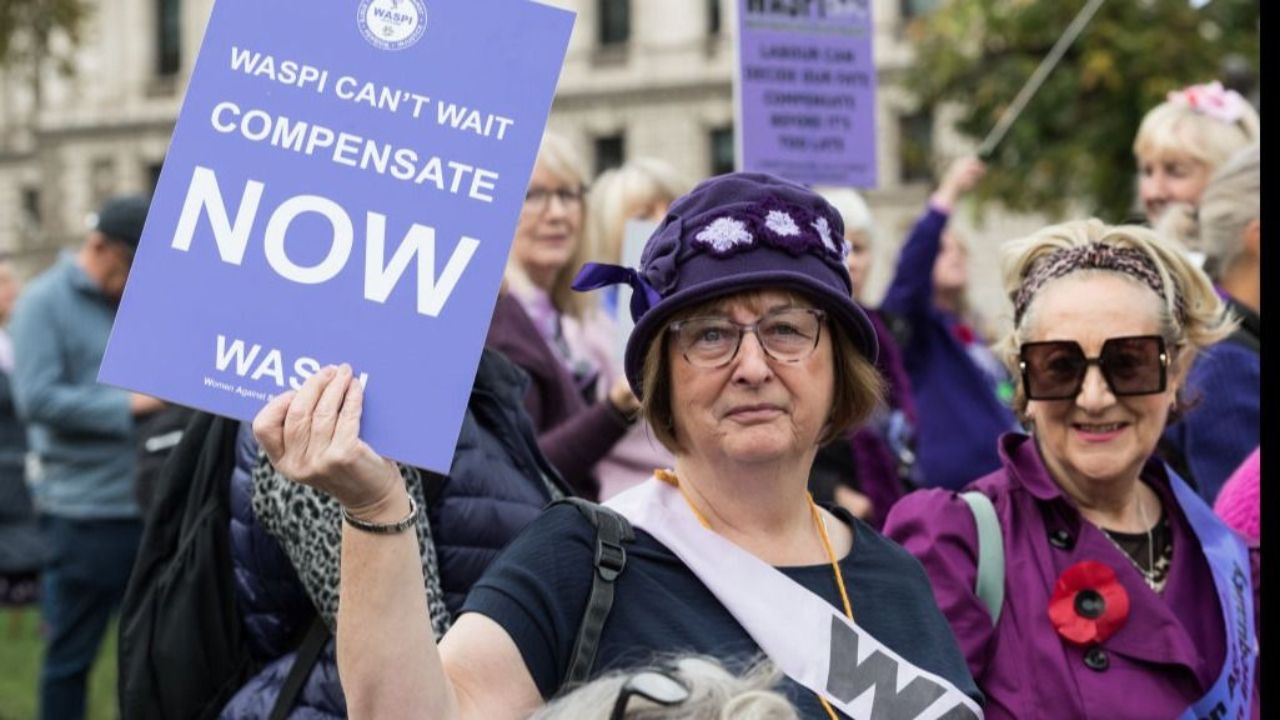
The Department for Work and Pensions (DWP) has confirmed it is considering a potential £2,950 compensation payment for certain women affected by historic State Pension age communication failures. The development follows ongoing scrutiny of how changes to women’s pension age were communicated during the 1990s and 2000s.
The figure relates to possible redress for maladministration in official notification processes — not repayment of lost pensions. Any scheme would require formal government approval, Treasury funding and a defined eligibility framework before payments could be made.
As of February 2026, no automatic payments have been issued. The position remains subject to final policy decisions.
What Has Changed in February 2026?
Renewed attention has centred on confirmation that the £2,950 compensation level is under formal consideration following findings that communication about State Pension age increases may not have met required standards in some cases.
The payment would represent redress for distress and inconvenience caused by inadequate notification — rather than a reversal of pension age legislation.
No confirmed payment date has been announced. Implementation would require:
- Government approval
- Treasury funding allocation
- Administrative rollout by DWP
- A defined eligibility process
Until official guidance is published on GOV.UK, no application window exists.
Background: Why the WASPI Issue Arose
The debate concerns women born in the 1950s whose State Pension age increased from 60 to 65, and later beyond, under legislation passed by Parliament.
Equalisation of pension ages between men and women was introduced through the Pensions Act 1995, with further acceleration under the Pensions Act 2011.
The campaign known as Women Against State Pension Inequality (WASPI) argues not that equalisation itself was unlawful, but that communication of the changes was inadequate and left some women without sufficient notice to adjust retirement plans.
The issue therefore centres on administrative standards — not pension entitlement.
Where the £2,950 Figure Comes From
The £2,950 sum aligns with mid-range compensation bands used in public sector maladministration frameworks. It reflects potential redress for:
- Distress
- Inconvenience
- Uncertainty caused by late or unclear notification
It does not represent:
- Backdated State Pension payments
- A refund of “lost years”
- Restoration of the pension age to 60
It is a one-off proposed redress payment per eligible individual.
Who Could Qualify for the £2,950 Payment?
If approved, eligibility would likely apply to women who:
- Were born in the 1950s
- Experienced a rise in State Pension age
- Did not receive adequate or timely notification
- Can be identified within defined maladministration criteria
Crucially, not every woman born in the 1950s would automatically qualify.
Eligibility would depend on specific communication failings, not simply date of birth.
Full criteria have not yet been formally published.
Will Payments Be Automatic?
No payments are automatic at this stage.
If a scheme is introduced, the DWP would likely establish:
- A defined eligibility framework
- A verification process
- Direct contact with eligible individuals
- Clear payment timelines
In some redress schemes, the department identifies recipients using existing records. In others, individuals may need to confirm details.
Until official guidance is issued, assumptions should be avoided.
Why the Issue Has Taken Years to Resolve
The delay reflects the complexity of separating lawful pension reform from administrative communication failures.
Governments have legal authority to change State Pension age. However, public bodies must meet standards of clarity and fairness when implementing significant life-planning policies.
Assessing communication over decades requires review of:
- Letter issuance records
- Notification timelines
- Administrative standards in place at the time
Such processes are legally and procedurally detailed, contributing to the length of the debate.
Financial Impact on Households Across the UK
For some affected women across England, Scotland, Wales and Northern Ireland, the change in pension age resulted in:
- Delayed retirement
- Extended working years
- Reliance on savings or benefits
- Increased financial pressure
The proposed £2,950 compensation would not replace lost income but may acknowledge the distress caused.
Its financial impact would therefore be limited compared with pension entitlement itself.
What This Does Not Change
The proposed compensation does not mean:
- The State Pension age will return to 60
- Pension age equalisation will be reversed
- Additional annual payments will follow
- Universal Credit or State Pension rates will increase
The measure concerns historic communication standards only.
Why the Government Is Considering Compensation
The rationale centres on maintaining public trust in administrative processes.
Where maladministration is identified, redress may be considered to acknowledge impact — even when underlying legislation remains valid.
Compensation frameworks aim to:
- Recognise distress
- Uphold administrative standards
- Restore confidence in public bodies
Any decision would balance fiscal responsibility with fairness.
What Should Affected Women Do Now?
At this stage, there is no formal application process.
Practical steps include:
- Monitor official updates via GOV.UK
- Ensure contact details with DWP are current
- Avoid paying third-party claim firms
- Be cautious of unofficial social media claims
If a scheme is approved, the government will publish clear instructions.
No payment is currently being processed automatically.
How This Compares to Previous Redress Schemes
Historically, government redress payments have:
- Been one-off lump sums
- Applied to defined eligibility groups
- Required structured administrative rollout
The proposed £2,950 would follow a similar model rather than creating a recurring benefit.
Wider State Pension Policy Context
State Pension age increases were legislated through Parliament and remain in force.
Future pension age reviews are conducted separately and are based on life expectancy and fiscal sustainability.
The WASPI compensation discussion does not alter existing pension age schedules.
Frequently Asked Questions
When will the £2,950 WASPI compensation be paid?
No payment date has been confirmed. Implementation depends on government approval and administrative rollout.
Who qualifies for the £2,950 payment?
Likely women born in the 1950s who meet defined criteria linked to communication failures. Not all affected women qualify automatically.
Is the £2,950 confirmed by DWP?
The amount is under consideration following findings about communication shortcomings. Final approval has not yet been formally announced.
Do I need to apply?
Currently, there is no application process. Official guidance will be published if a scheme is introduced.
Will this affect my State Pension payments?
No. The compensation would be separate from regular State Pension entitlement.
Is this backdated pension money?
No. It is proposed redress for distress and inconvenience, not repayment of lost pension years.
Could there be further payments?
At present, discussions refer to a one-off payment only.