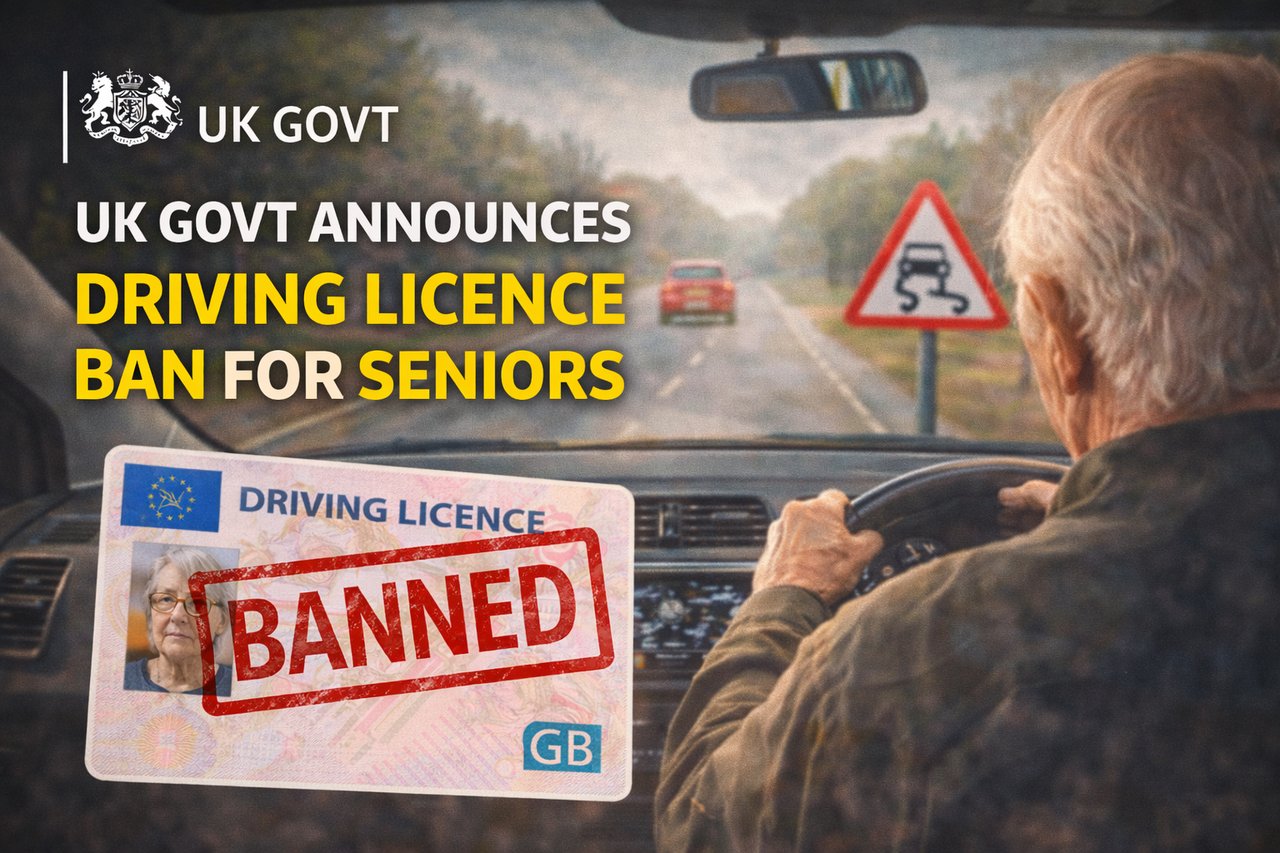
Reports suggesting a blanket driving licence ban for over-60s from 2026 are incorrect. The Driver and Vehicle Licensing Agency (DVLA) has not announced any automatic ban based on age alone. Instead, proposed updates expected from 2026 focus on health-based assessments, clearer medical declarations and structured renewals, particularly where safety concerns arise.
The UK Government says the aim is to strengthen road safety while protecting independence. Older drivers who meet medical and legal standards will continue to drive. Any changes would build on existing DVLA rules rather than replace them.
Here is what is actually proposed — and what remains speculation.
What Has Been Announced So Far?
There is no confirmed universal driving ban for drivers aged 60 or over.
Instead, the Government has indicated that reforms may include:
- Stronger medical self-declaration processes
- Earlier engagement with health checks
- Clearer reporting requirements for certain conditions
- Greater consistency in assessments
Age alone will not remove driving rights. Fitness to drive remains the central test under UK law.
Why the Rules Are Being Reviewed
Officials cite several reasons:
- Longer life expectancy and more older drivers
- The need to reflect modern health standards
- Road safety data linked to age-related medical conditions
- Ensuring early identification of risks
While older drivers are statistically cautious, certain health conditions can affect reaction time, vision and judgement. The proposed approach focuses on ability rather than age discrimination.
Current Rules Already in Place
Under existing law:
- Drivers must renew their licence at age 70
- Renewal then occurs every three years
- Drivers must declare relevant medical conditions
- The DVLA can request medical evidence where necessary
The 2026 updates would strengthen or clarify these procedures rather than introduce a new age threshold.
Who Would Be Affected?
The proposals primarily concern drivers aged 60 and above, with greater scrutiny as drivers reach older age groups.
However:
- Healthy drivers with no declared conditions are unlikely to face disruption
- Medical evidence would determine any restrictions
- Decisions remain individual, not automatic
The system is designed to be risk-based rather than purely age-based.
Medical Conditions Under Review
Conditions that already require disclosure include:
- Dementia
- Severe vision impairment
- Epilepsy
- Certain heart conditions
- Neurological disorders
The updated framework may introduce:
- More structured follow-up once a condition is declared
- Possible GP or specialist confirmation
- Clearer timelines for reassessment
Drivers remain legally responsible for informing the DVLA of relevant medical conditions.
How Licence Renewals Could Change
Currently, licence renewal begins at age 70. Under 2026 proposals:
- Earlier health engagement may occur from age 60 in some cases
- Vision and cognitive health may receive greater scrutiny
- Renewal checks could become more detailed
This does not mean everyone over 60 must renew annually. Most renewals are expected to remain online or postal-based.
Role of Technology and Voluntary Assessments
The Government has also highlighted supportive measures, including:
- Advanced Driver Assistance Systems (ADAS)
- Automatic emergency braking
- Lane-keeping technology
- Voluntary skills refresher assessments
These tools aim to extend safe driving years rather than restrict them.
Voluntary driving assessments may help boost confidence and identify areas for improvement without automatically affecting licence status.
Is There a Complete Ban?
No.
There is no confirmed blanket ban for drivers over 60.
Where driving is deemed unsafe, potential outcomes could include:
- Temporary suspension pending review
- Restricted licences (e.g., daylight-only driving)
- Medical reassessment requirements
The approach is intended to be proportionate and evidence-based.
Impact on Independence
The Government has acknowledged that driving is essential, particularly in rural areas.
Any restrictions are intended to:
- Protect public safety
- Avoid unnecessary loss of independence
- Provide alternative transport guidance where needed
Investment in community transport schemes is expected to continue alongside any regulatory changes.
Avoiding Misinformation and Scams
Driving licence rumours often trigger scam activity.
Official bodies:
- Do not send unsolicited texts asking for payment
- Do not request bank details via random links
- Publish updates through GOV.UK and official DVLA channels
Drivers should rely only on verified government sources.
What Over-60 Drivers Should Do Now
If you are aged 60 or above:
- Keep medical records up to date
- Attend regular eye tests
- Inform the DVLA of relevant health changes
- Monitor official announcements
Most drivers in good health should experience minimal change.
What Happens Next?
The 2026 updates remain subject to consultation and refinement.
Final guidance will be published well before implementation. The Government has committed to advance notice and clear timelines.
FAQs
Is there a driving ban for over-60s in 2026?
No. There is no confirmed blanket ban based on age.
Will all drivers over 60 need new medical tests?
Not automatically. Additional checks would apply mainly where medical conditions are declared.
When do the new rules start?
Proposals reference 2026, but final details are subject to consultation.
Do I need to renew my licence earlier?
Current renewal begins at 70. Any changes will be clearly announced in advance.
What if I have a medical condition?
You must inform the DVLA. Medical evidence may be required to confirm fitness to drive.
Could my licence be restricted instead of removed?
Yes. Restrictions may apply in some cases rather than full withdrawal.
Where can I find official updates?
Visit GOV.UK or contact the DVLA directly.