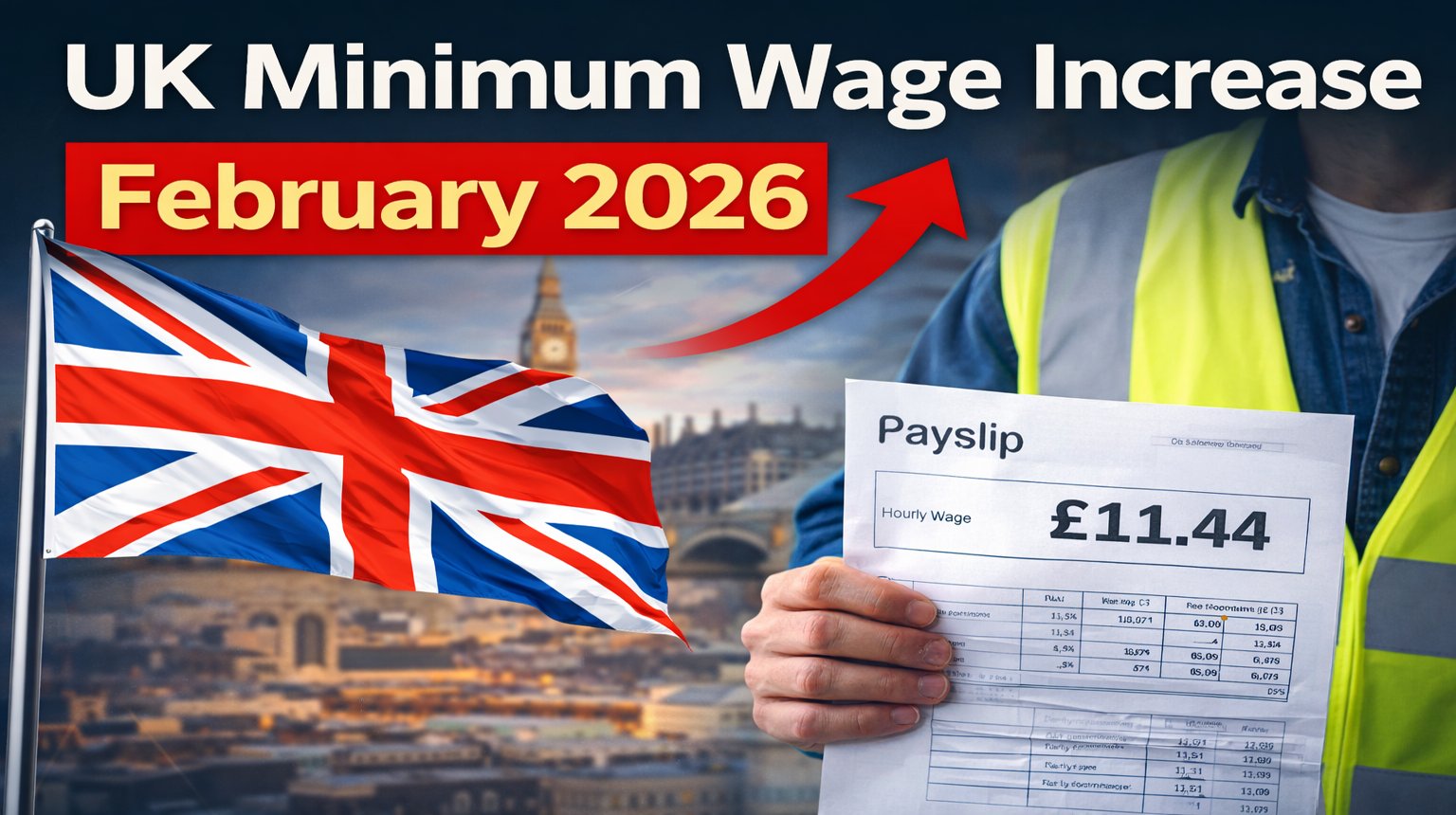
UK Minimum Wage : Starting February 2026, the UK Government will implement a fresh hike in the national minimum wage — a move that aims to help workers across the country manage rising living costs. From retail staff to care workers, part-time employees to apprentices, the update is set to impact millions of people. But how much will wages rise? Who qualifies? And what difference will it actually make?
Here’s a clear and detailed breakdown of everything you need to know about the 2026 UK minimum wage increase.
Why the Minimum Wage Is Increasing in 2026
The Government regularly reviews minimum wage rates to ensure they reflect changing economic conditions. The February 2026 increase is primarily driven by:
- Rising food, energy, and housing costs
- Continued cost-of-living pressures
- Labour market shortages
- Recommendations from the Low Pay Commission
The goal is to strike a balance between protecting low-income workers and ensuring businesses can manage the higher payroll costs.
Who Sets the UK Minimum Wage?
The Low Pay Commission (LPC) — an independent body — conducts in-depth research on wages, inflation, and employment. Based on their advice, the government finalizes the rates, which are legally enforced by HM Revenue and Customs (HMRC).
How the UK Minimum Wage System Works
Unlike a single flat rate, the UK operates a tiered minimum wage system based on:
- Age (16–17, 18–20, 21+)
- Apprenticeship status
- Employment type (part-time, full-time, or casual)
This system aims to reward experience while safeguarding fair pay.
When Will the New Rates Take Effect?
The updated minimum wage rates will be effective from February 2026. That means:
- Workers will start seeing the change in their February or March payslips, depending on payroll cycles.
- Employers are legally required to implement the new rates from that month onward.
New Minimum Wage Rates by Age Group (2026)
While final figures may vary slightly upon confirmation, the following outlines expected increases:
Ages 21 and Over – National Living Wage
This group will receive the highest increase, applying to:
- Full-time and part-time workers
- Temporary and zero-hours workers
- Freelancers under certain contracts
Ages 18 to 20
The minimum wage for this group will also rise, narrowing the gap with the National Living Wage — a nod to increasing living costs for young adults.
Ages 16 to 17
Teen workers balancing school and part-time jobs will see an increase to reflect higher general expenses.
Apprentices
Those under 19 or in their first year of an apprenticeship will receive a dedicated apprentice rate, which is also increasing to support their training and living costs.
Sector-Wise Impact: Who Benefits the Most?
Retail Workers
Many retail roles offer minimum wage. Workers in this sector will likely see:
- Higher hourly earnings
- Better income stability during seasonal rushes
Hospitality Staff
Pubs, cafés, and restaurants will now:
- Be required to pay the full minimum wage regardless of tips or service charges
- Not use gratuities to offset wages
Care Workers
This sector, often overlooked, benefits significantly:
- Frontline carers and home support staff will receive improved compensation
- May help reduce turnover and burnout
Warehouse and Delivery Staff
With e-commerce booming, the hike benefits logistics workers who face long hours and physically demanding jobs.
Office Assistants and Admin Staff
Entry-level office roles often align with minimum wage. The increase supports:
- Better starting salaries
- Reduced pay gaps
- Stronger career progression incentives
Part-Time and Zero-Hours Workers Are Included Too
Many assume minimum wage laws apply only to full-time employees — but that’s not true. All workers, including those on flexible or irregular hours, must be paid the correct hourly rate.
What’s NOT Changing in 2026
Some core rules remain the same:
- Unpaid trial shifts are still illegal
- Tips or service charges cannot count toward minimum wage
- Wage deductions cannot bring pay below legal thresholds
- Employers cannot delay the increase or average out pay
What Workers Can Expect in Take-Home Pay
While the gross hourly rate increases, the actual amount you see in your bank account depends on:
- Income tax and National Insurance
- Pension contributions
- Student loan repayments
Still, most minimum-wage earners will notice a clear improvement in net pay.
What Workers Should Do in February 2026
To make sure you’re getting paid fairly:
- Check your payslip closely for the updated rate
- Track your hours accurately
- Report discrepancies to your employer or HMRC if something seems wrong
- Know your rights — especially if you’re under 21 or an apprentice
What Employers Should Prepare For
Companies and HR departments should:
- Update payroll software and contracts
- Communicate wage changes clearly to staff
- Prepare budgets for increased wage expenses
- Review compliance with HMRC
Enforcement: What Happens If Rules Aren’t Followed?
If employers fail to pay the correct rate, they can face:
- Fines and back-pay penalties
- Legal action
- Being publicly named by HMRC
Employees can file complaints confidentially and receive owed wages if underpaid.
Common Myths — Busted
| Myth | Reality |
|---|---|
| Only full-timers benefit | False. All workers are protected. |
| Tips can cover the wage | False. Tips are extra, not wage substitutes. |
| Employers can delay implementation | False. Legal deadlines must be met. |
| You’ll lose benefits if pay increases | Partially true. Some benefits may taper off, but wage hikes still offer long-term gains. |
Why This Increase Matters
Though modest, the February 2026 increase helps:
- Alleviate financial stress
- Improve worker morale
- Retain essential staff
- Narrow inequality
- Boost economic participation
Key Takeaways
- New minimum wage rates take effect February 2026
- All age groups benefit, including apprentices
- Tips, deductions, and unpaid trials remain illegal
- Employers must comply from day one
- Take-home pay increases for most workers
- Strong enforcement protects employees
The 2026 minimum wage increase comes at a critical time for the UK workforce. With households still navigating inflation and financial uncertainty, this boost delivers meaningful relief to workers in every sector.
For employees, understanding your rights and reviewing payslips is crucial. For employers, early preparation and open communication will ensure a smooth transition. As the cost of living continues to rise, the national minimum wage remains one of the most important tools in promoting fair pay and workplace dignity across Britain.